
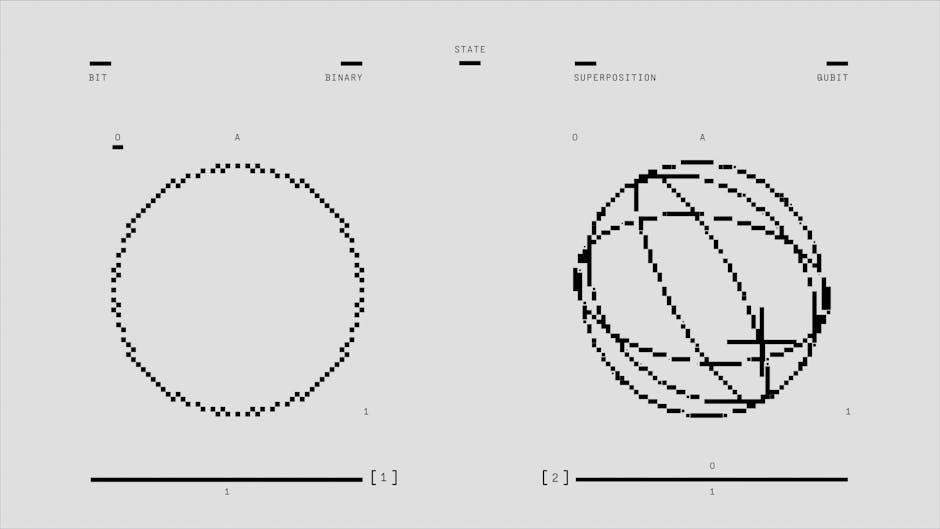
Experiments Confirming Quantum Entanglement
Quantum entanglement is one of the most fascinating phenomena in quantum physics. It describes a situation where particles become interconnected such that the state of one instantly influences the state of another, regardless of the distance between them. Over the years, scientists have conducted numerous experiments confirming quantum entanglement to validate its existence and explore its implications.
Historical Background
The concept of quantum entanglement was first introduced by Albert Einstein, Boris Podolsky, and Nathan Rosen in 1935 through the famous EPR paradox. Initially debated as a theoretical curiosity, it wasn't until the advent of advanced measurement techniques that physicists could test these predictions experimentally.
Key Experiments
One of the earliest definitive experiments was conducted by Alain Aspect and his team in the 1980s. Their experiments involved measuring entangled photon pairs and testing Bell inequalities, which confirmed the non-local characteristics of quantum mechanics. Since then, numerous other experiments, such as those using trapped ions and superconducting qubits, have further corroborated these findings. For details about recent advancements, see our recent advancements in quantum entanglement experiments.
Implications of These Experiments
Confirming quantum entanglement has profound implications for the development of quantum computing, quantum cryptography, and secure communication systems. By leveraging entangled particles, researchers aim to create more secure data transfer methods and powerful computing architectures. To understand practical applications, visit our page on applications of quantum entanglement.
Conclusion
Experiments confirming quantum entanglement have revolutionized our understanding of quantum physics. As technology advances, ongoing research continues to unlock new potentials for this phenomenon, shaping the future of information technology and communication networks.