Exploring Virtual Reality in Education
Understanding Virtual Reality in Education
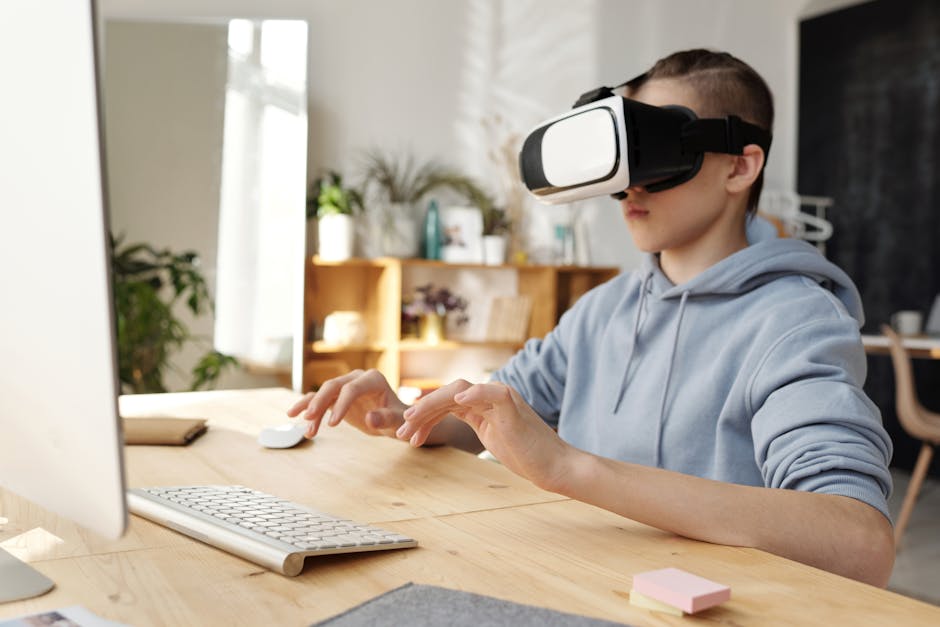
Virtual reality (VR) is rapidly becoming a game-changer in the field of education. By enabling students to immerse themselves in three-dimensional environments, VR provides a unique opportunity to enhance traditional teaching methods and foster active learning. Whether exploring ancient civilizations or practicing complex scientific experiments, learners gain practical insights that are difficult to achieve through conventional classroom activities.
Benefits of Integrating Virtual Reality into Learning
- Enhanced Engagement: Students are more motivated when experiencing interactive content in a virtual setting.
- Immersive Learning Experiences: Virtual reality offers a sense of presence that allows for deeper understanding of concepts.
- Improved Science, Technology, Engineering, and Math (STEM) Education: Complex ideas become accessible through visual and experiential learning.
- Increased Accessibility: Virtual environments can be tailored to meet diverse learning needs.
Challenges and Future of Virtual Reality in Education
Despite its promising potential, integrating virtual reality in education faces challenges such as high costs, lack of infrastructure, and the need for specialized training. However, as technology advances and prices decrease, more institutions are adopting VR to prepare students for a digital future. The future of education will likely see a blend of traditional methods and innovative VR experiences, creating a more engaging and effective learning environment.
Conclusion
Exploring virtual reality in education offers exciting possibilities to revolutionize how knowledge is imparted and absorbed. Educators and institutions should consider embracing this technology to foster interactive, immersive, and memorable learning experiences for students around the world.