
Quantum Computing Basics: A Beginner's Guide
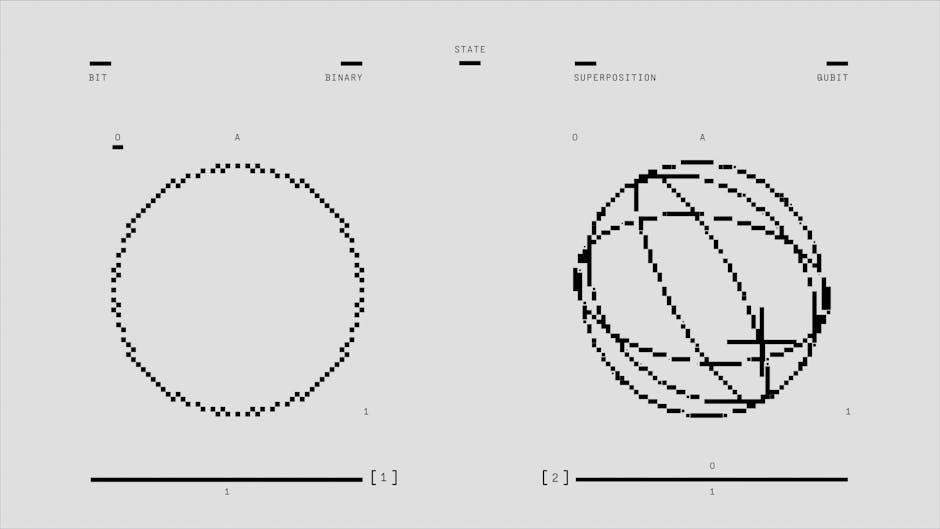
Quantum computing is an emerging field that leverages the principles of quantum mechanics to perform computations far beyond the capabilities of classical computers. Unlike traditional computers that use bits, quantum computers utilize quantum bits, or qubits, which can exist in multiple states simultaneously through a property called superposition.
One of the key concepts in quantum mechanics is entanglement, a phenomenon where particles become linked such that the state of one instantly influences the state of another, regardless of distance. This entangled state allows quantum computers to process complex calculations more efficiently than classical counterparts.
The potential applications of quantum computing in various industries include solving optimization problems, simulating molecules for new drug discovery, and improving cryptography. Despite its promise, developing practical quantum computers remains challenging due to issues like qubit stability and error correction.
As research advances, understanding the basics of quantum computing fundamentals will be essential for those interested in the future of technology. Whether you're a student, a tech enthusiast, or a professional, grasping these core principles provides valuable insights into the transformative power of this revolutionary technology.