
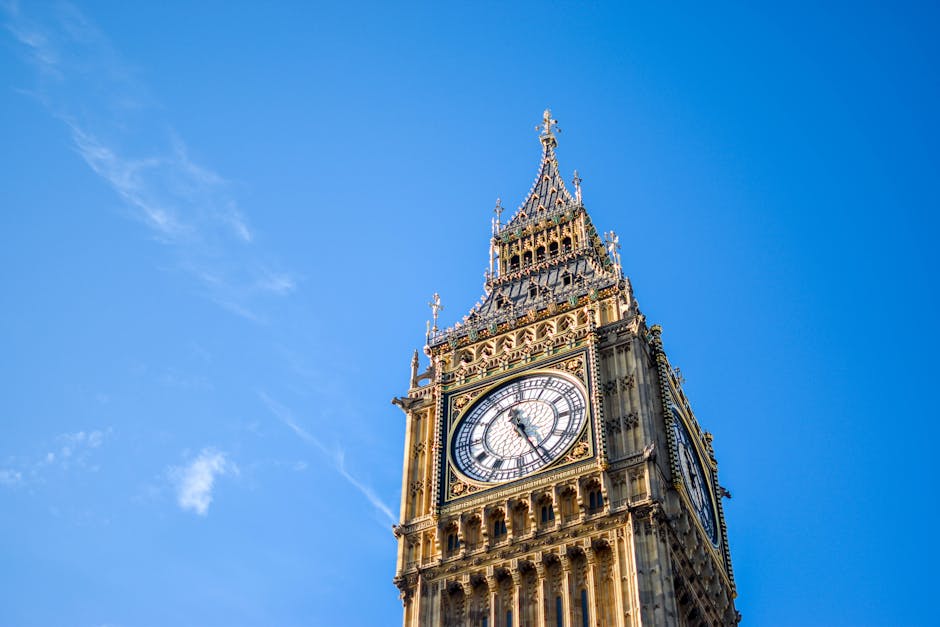
Disentangling the Complexities of Time Travel Logic
Time travel has long captured the imagination of scientists, writers, and thinkers alike. At its core, it presents a unique challenge to our understanding of reality and causality. To make sense of the intricacies involved, it's essential to delve into the logical frameworks that underpin theoretical models of moving through time.
One of the fundamental concepts in understanding time travel paradoxes is the idea of causality. Traditional cause-and-effect relationships are challenged when temporal manipulation enters the equation. For example, the famous grandfather paradox illustrates how altering past events could lead to logical inconsistencies in the timeline.
Several theories attempt to resolve these paradoxes, such as the multiverse hypothesis, which suggests that every possible outcome creates a new, branching timeline. Alternatively, approaches like self-consistency principles aim to show that only logically consistent events can occur in a universe that permits time travel.
Understanding the logical rules that govern potential time travel scenarios is crucial for making sense of these complex ideas. Whether through deterministic laws or probabilistic models, researchers continue to explore how causality, free will, and the fabric of spacetime interact in the context of temporal manipulation.
For enthusiasts and scholars alike, unraveling these logical intricacies not only deepens our understanding of the universe but also sparks imagination about what might be possible in the future. As research advances, the line between science fiction and scientific possibility continues to blur, making the study of time travel logic a compelling field.