
Unveiling Hidden Dimensions in Quantum Computing
Understanding Hidden Dimensions in Quantum Computing
Quantum computing is an emerging technology that leverages the principles of quantum mechanics to perform complex computations at unprecedented speeds. One intriguing aspect of this field is the concept of hidden dimensions, which refer to theoretical additional spatial or informational layers beyond our conventional understanding.
The Role of Quantum Entanglement
At the core of quantum mechanics is quantum entanglement, a phenomenon where particles become interconnected in such a way that the state of one instantly influences the state of another, regardless of distance. This entanglement might be connected to hidden dimensions that facilitate faster, more efficient quantum interactions.
The Concept of Multi-Dimensional States
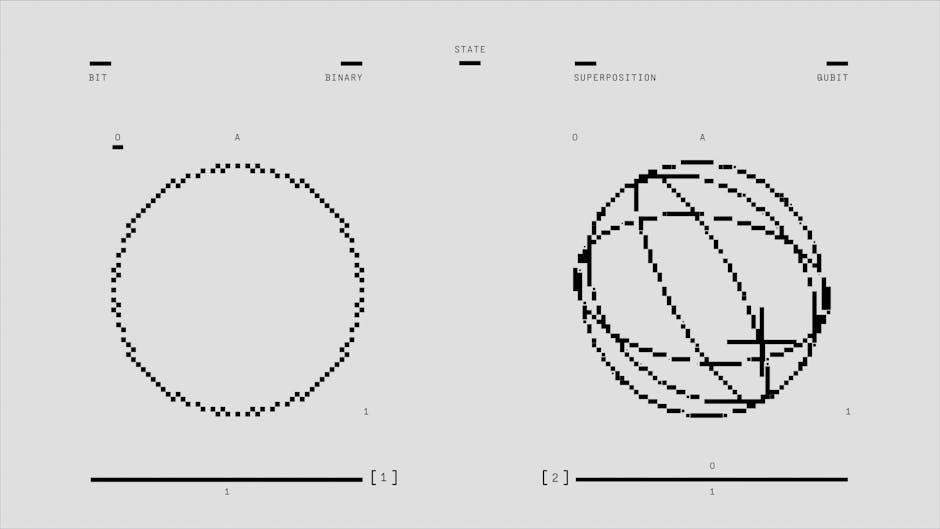
Researchers are investigating the idea of multi-dimensional quantum states, which could potentially utilize extra dimensions to encode and process information more densely than traditional qubits. Harnessing these extra layers could significantly enhance the computational power of quantum systems.
Potential Applications and Future Research
Understanding and manipulating hidden dimensions may unlock new capabilities in quantum simulation, cryptography, and solving complex problems that are currently intractable. Ongoing research aims to discover whether these dimensions exist and how they can be practically integrated into quantum algorithms.
If you're interested in exploring more about the possibilities of higher-dimensional theories in computing, check our article on higher-dimensional theories.