
Understanding Quantum Entanglement: A Beginner's Guide
Quantum entanglement is one of the most intriguing phenomena in the realm of quantum physics. It describes a situation where two or more particles become linked such that the state of one instantly influences the state of the other, regardless of the distance separating them. This phenomenon challenges our classical understanding of the universe and opens doors to revolutionary technologies like quantum computing and secure communication.
To better grasp the basics of quantum entanglement, it’s helpful to understand how particles can become entangled during certain interactions. Once entangled, measuring a property of one particle, such as its spin or polarization, instantly determines the corresponding property in the other particle. This non-local connection is what makes entanglement so unique and fascinating.
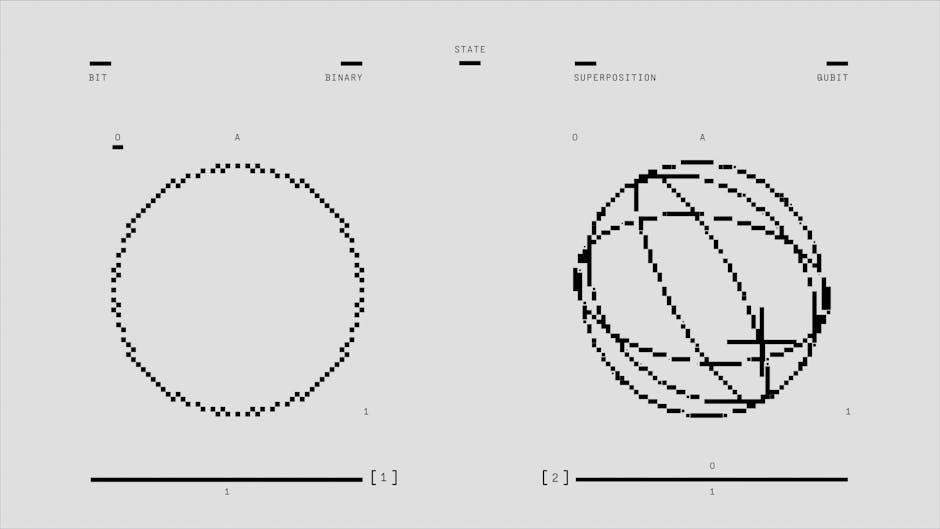
Applications of quantum entanglement extend beyond theoretical physics. In quantum computing, entanglement enables qubits to perform complex calculations at unprecedented speeds, promising to transform fields like cryptography and data processing. Additionally, entanglement plays a crucial role in quantum teleportation, where the state of a particle can be transmitted instantly across distances.
Despite its counterintuitive nature, quantum entanglement has been experimentally verified numerous times, reinforcing its significance in modern physics. To delve deeper into the science behind this phenomenon, consider exploring our overview of key experiments on entanglement.
As research continues to evolve, understanding quantum entanglement not only broadens our comprehension of the universe but also paves the way for groundbreaking technological advancements. Whether you're a student, researcher, or enthusiast, immersing yourself in the study of quantum entanglement offers a glimpse into the future of science.