
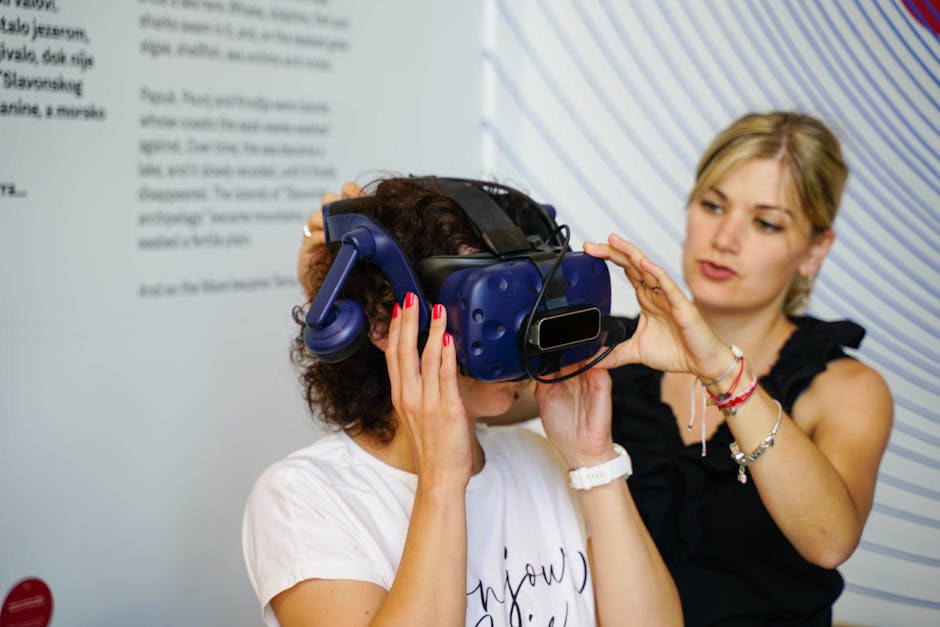
Virtual and Augmented Reality in Education: Transforming Learning Experiences
Introduction to Virtual and Augmented Reality in Education
In recent years, virtual reality (VR) and augmented reality (AR) have emerged as innovative tools transforming traditional teaching methods. These technologies provide immersive learning experiences that can captivate students and foster deeper understanding.
Benefits of Using VR and AR in Education
- Enhanced Engagement: Students are more motivated when they interact with virtual environments and augmented content.
- Improved Retention: Immersive experiences help in better retention of complex concepts such as anatomy, history, and science.
- Accessibility: VR and AR can simulate real-world scenarios, making learning accessible to all students.
Applications of VR and AR in Education
These technologies are being integrated into various subjects, including:
- Science labs for virtual experiments
- Historical site virtual tours
- Mathematics visualizations
- Language learning through immersive environments
Challenges and Future Outlook
Despite their advantages, integrating VR and AR in education faces challenges such as high costs and the need for specialized hardware. However, ongoing advancements are making these technologies more affordable and accessible, paving the way for a future where immersive learning experiences become commonplace.
As educators and technologists continue to collaborate, the potential for VR and AR to redefine education remains immense, promising more engaging and effective learning experiences for students worldwide.