
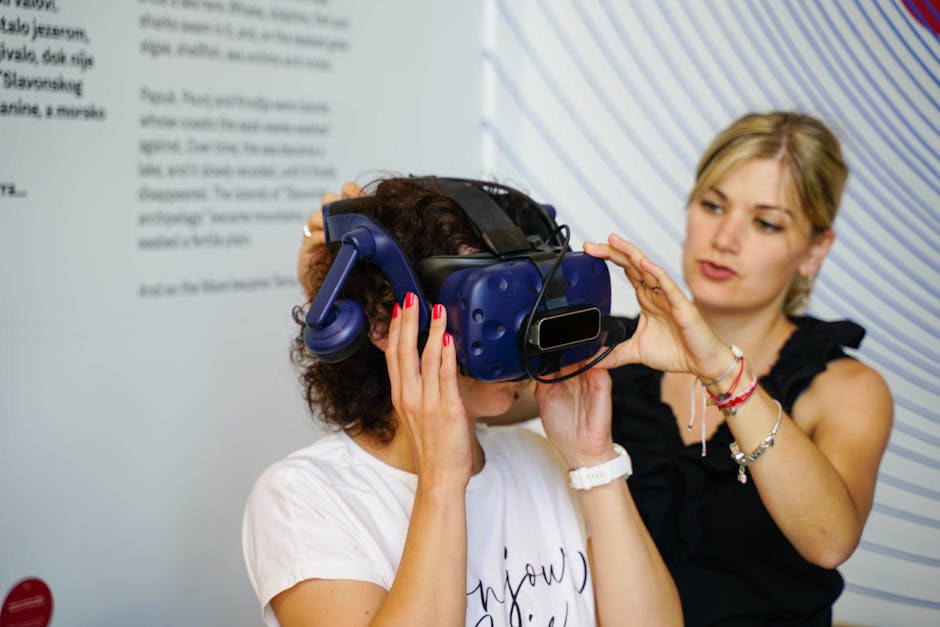
Exploring the Impact of Virtual Reality on Education
Virtual reality (VR) has emerged as a groundbreaking technology in the realm of education. Its ability to create immersive and interactive experiences offers students a new way to engage with complex concepts and practical skills.
Traditional learning methods often rely on textbooks and lectures, which can sometimes be abstract or hard to visualize. VR technology bridges this gap by providing virtual environments where learners can explore, manipulate, and interact with digital objects in real-time. For example, students studying anatomy can virtually examine a 3D human body, gaining a deeper understanding of human biology.
The impact of virtual reality on education is evident across various levels of schooling. In higher education, VR offers simulation-based learning for fields such as medicine, engineering, and architecture. Medical students, for instance, can perform virtual surgeries, honing their skills without any risk to real patients.
Furthermore, virtual reality enhances immersive learning experiences that increase motivation and retention. Students are more likely to remember concepts when they are actively involved rather than passively listening or reading. This adoption of VR aligns with modern educational strategies that emphasize experiential learning.
Accessibility is also a key benefit. With the advancement of affordable VR hardware, more educational institutions can incorporate virtual reality into their curriculum, providing equitable learning opportunities to students regardless of their geographical location. Online VR platforms can bring global resources directly into the classroom.
As VR technology continues to evolve, its potential to revolutionize education becomes even more apparent. From remote learning opportunities to personalized education pathways, virtual reality is set to shape the future of education in unprecedented ways.