
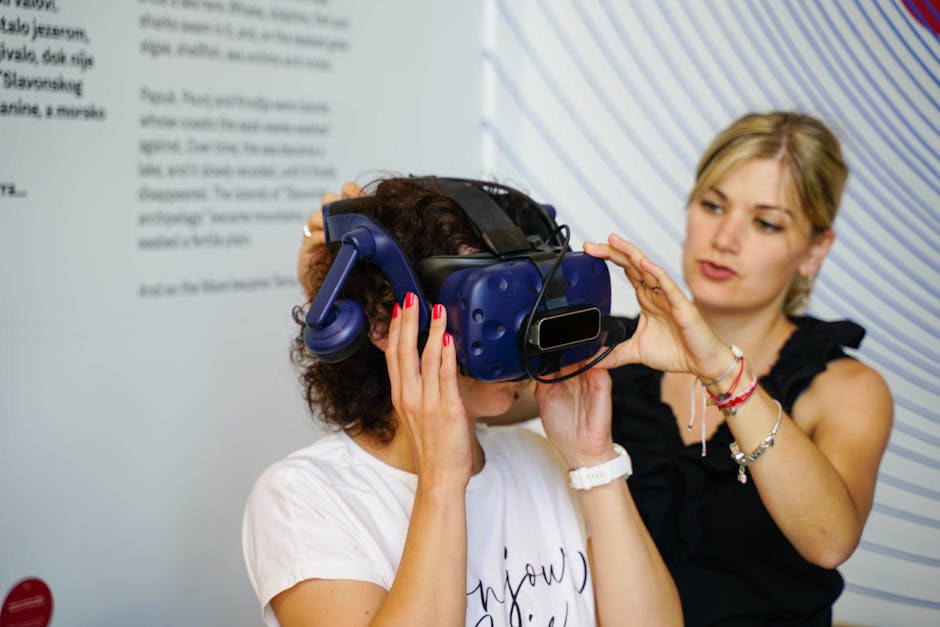
Enhancing Education with Virtual Reality and Immersive Experiences
In recent years, virtual reality has emerged as a powerful tool to revolutionize the traditional classroom. By incorporating immersive experiences, educators can create engaging and interactive lessons that captivate students' attention and enhance understanding.
These immersive environments allow students to explore complex subjects like anatomy, history, and physics in a virtual setting, offering a hands-on approach that textbooks alone cannot provide. For example, a virtual field trip can transport students to historical landmarks or distant planets, making learning truly memorable.
Implementing virtual reality benefits extends beyond engagement. It fosters better retention of information, promotes collaboration among students, and accommodates diverse learning styles. As technology becomes more accessible, schools are increasingly integrating virtual reality into their curricula to prepare students for a digital future.
Overall, the integration of virtual reality in education offers a transformative approach that makes learning more exciting, effective, and inclusive. Educators and students alike stand to gain from this innovative technology that opens up a world of possibilities for immersive learning experiences.
immersive-education-technologies-transform-student-engagement--
how-augmented-reality-is-changing-childrens-toy-industry--
the-future-of-remote-teaching-with-3d-virtual-worlds--
exploring-the-impact-of-mindfulness-tactics-on-academic-performance