
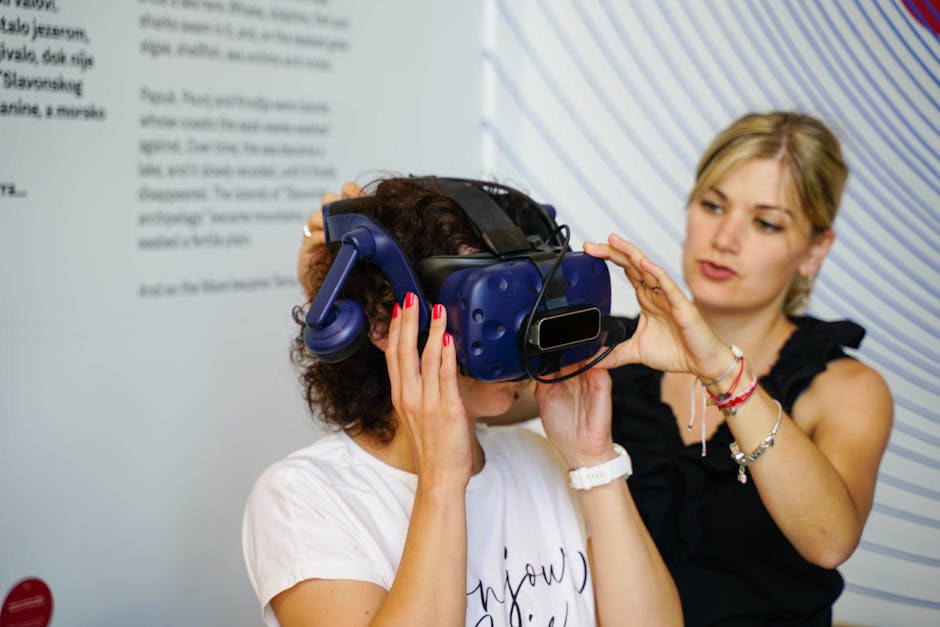
Enhancing Learning with Virtual Reality Study Environments
Virtual reality (VR) technology has rapidly gained popularity as a powerful tool in education. Virtual reality study environments offer a new dimension of interactive learning, enabling students to explore complex topics in an immersive setting. Whether it’s understanding historical sites, conducting virtual science experiments, or exploring distant ecosystems, VR provides an engaging alternative to traditional classroom methods.
One of the key advantages of using virtual reality study environments is the ability to simulate real-world scenarios in a safe and controlled manner. This allows students to practice skills such as surgical procedures, engineering design, or language immersion without physical constraints or risks. Additionally, VR can cater to different learning styles, making education more personalized and effective.
Many educational institutions are now integrating virtual reality in education to foster collaboration and critical thinking. Through shared virtual spaces, students can work together on projects, collaborate on problem-solving tasks, and engage in experiential learning activities that were previously impossible or impractical.
While the potential of virtual reality study environments is immense, challenges such as cost, technology accessibility, and curriculum integration remain. However, ongoing advancements are making VR more affordable and accessible, paving the way for broader adoption in schools and universities worldwide.
Overall, virtual reality introduces a transformative approach to learning that is engaging, practical, and full of possibilities. Educators and students alike can benefit from exploring these innovative environments, helping to prepare learners for a digital and immersive future.