
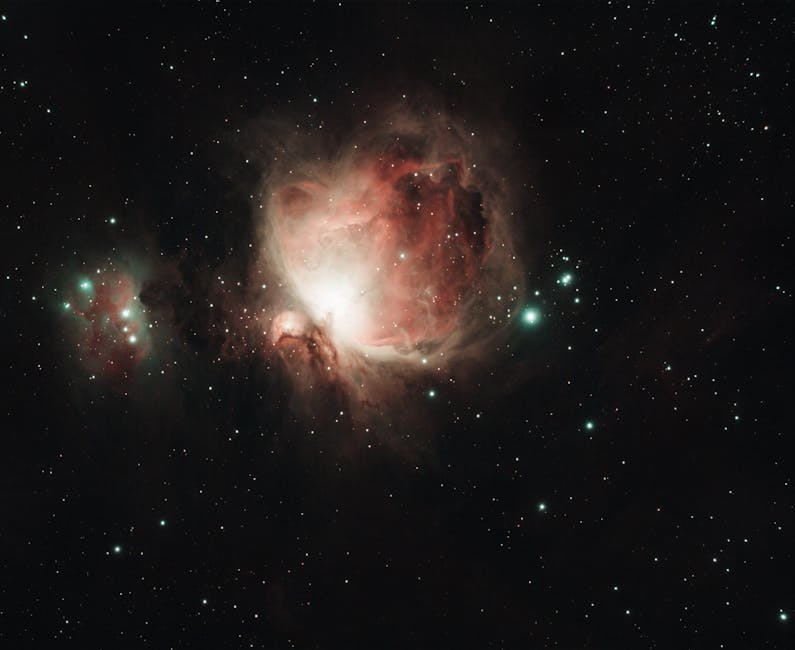
Interstellar Discoveries Impacting Humanity and the Future of Interstellar Exploration
Introduction
The quest to understand our universe has led to remarkable interstellar discoveries that are reshaping our view of the cosmos. These breakthroughs not only deepen our knowledge of distant celestial bodies but also influence the future of interstellar exploration missions.
Recent Interstellar Discoveries
Recent observations have identified exoplanets within habitable zones, raising hopes of finding environments conducive to life beyond Earth. Instruments like the Kepler Space Telescope and the James Webb Space Telescope have played pivotal roles in uncovering exoplanets in habitable zones.
Furthermore, the detection of interstellar objects such as 'Oumuamua' has provided valuable insights into the composition of objects traveling through our solar system from interstellar space. These findings have significant implications for future interstellar exploration missions.
Impact on Humanity
Discoveries outside our solar system expand our understanding of planetary systems and the potential for life elsewhere, fostering a sense of curiosity and urgency for exploration. They also influence technological advancements necessary for interstellar travel and communication.
The Future of Interstellar Exploration
Emerging propulsion technologies, such as solar sails and nuclear propulsion, are bringing interstellar travel closer to reality. Projects like Breakthrough Starshot aim to send lightweight probes to nearby stars, inspired by recent discoveries and scientific breakthroughs.
As our knowledge grows, so does the possibility of establishing interstellar colonies in distant star systems, potentially transforming humanity's future among the stars.
Conclusion
Interstellar discoveries are reshaping our understanding of the universe and paving the way for ambitious interstellar exploration projects. Continued research and technological innovation will be crucial as we venture further into the cosmos.
