
Understanding the Principles of Quantum Cryptography
Quantum cryptography is a revolutionary approach to secure communication that leverages the principles of quantum mechanics. Unlike traditional cryptography, which relies on complex mathematical algorithms, quantum cryptography uses the intrinsic properties of quantum particles to ensure security.
One of the fundamental principles of quantum cryptography is quantum key distribution (QKD). QKD allows two parties to generate and share a secret key with provable security, thanks to the laws of quantum physics. Any attempt at eavesdropping introduces detectable disturbances, making it impossible for an interceptor to gain information without being noticed.
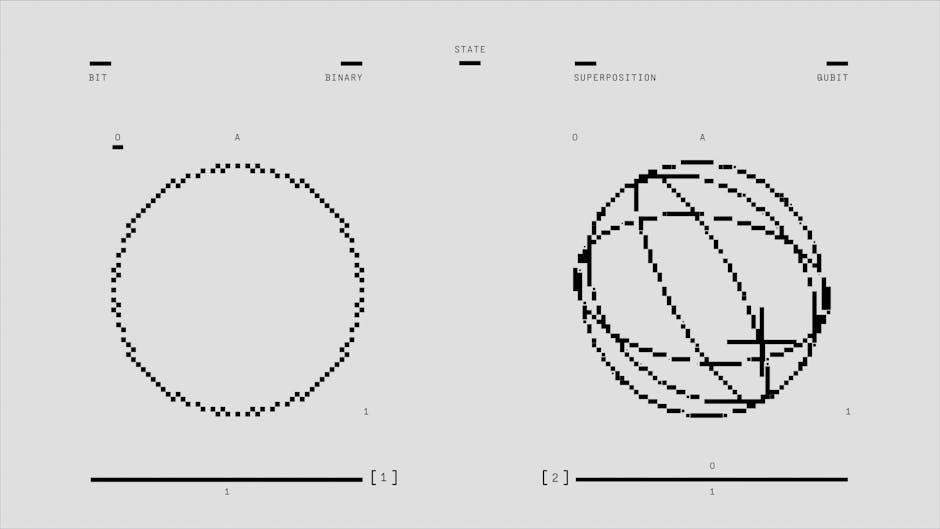
The concept of superposition plays a crucial role in quantum cryptography. It refers to a quantum system being in multiple states simultaneously until measured, enabling the creation of complex quantum states used in secure protocols.
Entanglement is another key principle. It describes a phenomenon where two or more particles become linked such that the state of one instantly influences the state of the other, regardless of distance. This property is exploited in quantum teleportation and secure key distribution systems.
Understanding these principles of quantum cryptography is essential for developing next-generation secure communication systems. As research progresses, integrating quantum technology into our daily communications could redefine data security and privacy.