
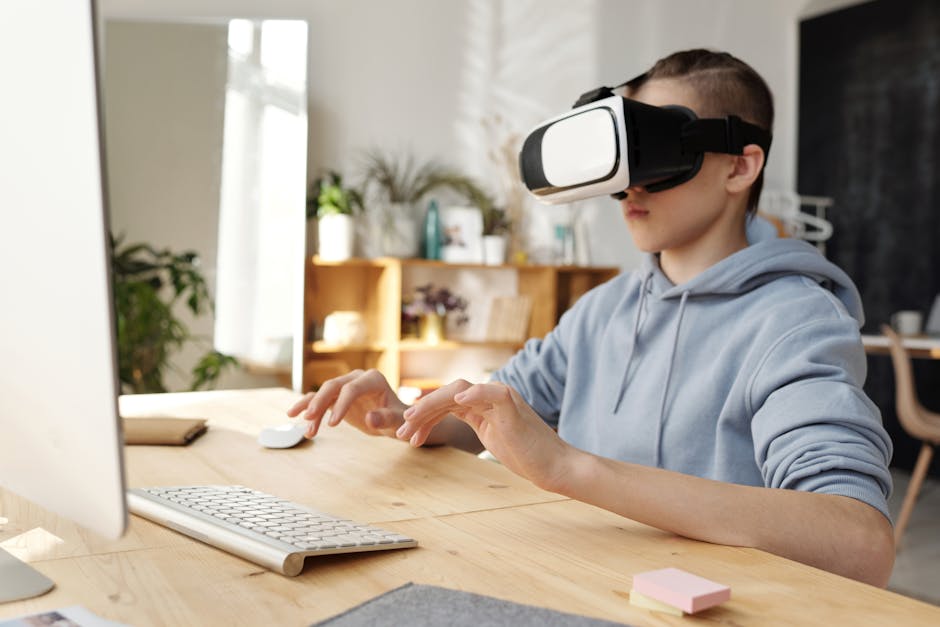
Transforming Education with Virtual Reality
In recent years, virtual reality in education has emerged as a groundbreaking technology that is transforming traditional teaching methods. By offering immersive experiences, virtual reality allows students to explore environments and concepts that would otherwise be inaccessible or difficult to visualize.
One of the key benefits of transforming education with virtual reality is increased student engagement. Instead of passive listening, learners actively participate in simulations, virtual field trips, and interactive lessons. This not only makes learning more enjoyable but also improves retention and understanding of complex subjects.
For example, students studying history can virtually visit ancient ruins, while those in science can explore the human body from the inside out. These interactive experiences make abstract concepts tangible and facilitate experiential learning.
As schools and universities adopt VR technology, it is essential to consider the accessibility and cost implications. However, with the rapid development of affordable VR devices, more educational institutions are beginning to implement these tools to enrich their curricula.
As we look to the future, virtual reality promises to further revolutionize education by enabling personalized learning environments and fostering collaboration among students worldwide. Incorporating virtual reality in education is a step towards a more immersive, engaging, and effective learning experience for students everywhere.