
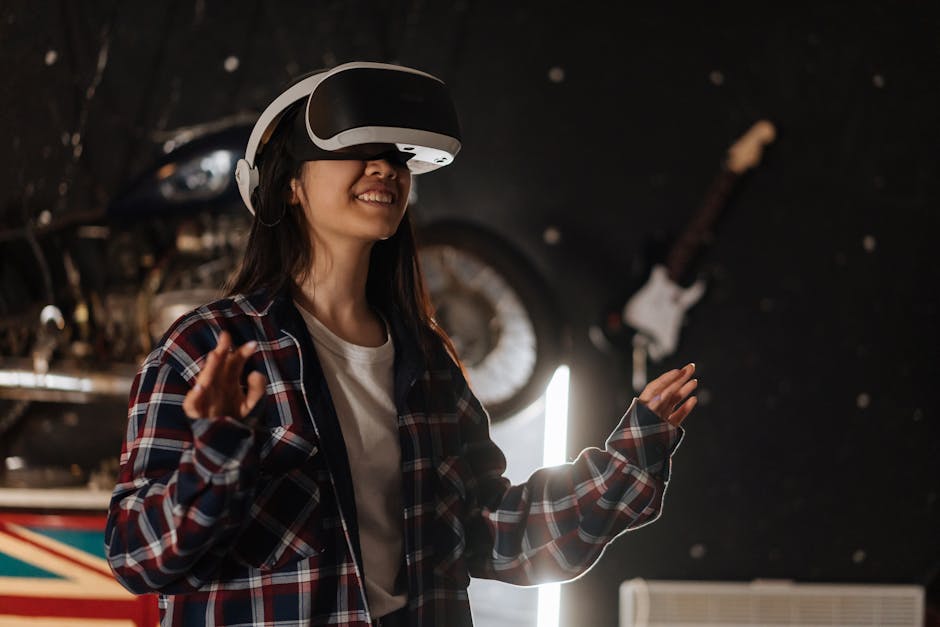
Beyond VR: The Next Step in Enhancing Virtual Reality
Virtual Reality (VR) has revolutionized the way we experience digital content. From immersive gaming to realistic simulations, VR technology has made incredible progress over the years. However, as technology continues to evolve, what lies beyond VR? What is the next step in enhancing virtual reality?
One exciting advancement is the integration of haptic feedback in VR experiences. Haptic feedback provides users with a sense of touch and interaction within virtual environments. By incorporating sensors and actuators into VR devices, users can feel the texture, resistance, and vibrations of virtual objects. This enhanced level of realism opens up new possibilities for training simulations, medical applications, and gaming experiences.
Another area of development beyond VR is augmented reality (AR). AR overlays digital information onto the real world, blending virtual and physical elements seamlessly. While VR creates entirely immersive environments, AR enhances the real world with digital overlays, enhancing everyday experiences. Pokemon Go, for example, popularized AR by allowing users to capture virtual creatures in their physical surroundings.
Brain-computer interface (BCI) technology is another frontier that holds promise for the future of virtual reality. BCI enables direct communication between the brain and external devices, bypassing traditional input methods like controllers or keyboards. Imagine being able to control virtual objects and environments with your thoughts alone. BCI has the potential to revolutionize VR accessibility and make experiences even more intuitive and engaging.
Advancements in graphics and processing power are also pushing the boundaries of virtual reality. Real-time ray tracing, for instance, enables stunning visuals with realistic lighting and reflections. As hardware becomes more capable, VR experiences will become even more immersive and visually stunning.
The future holds countless possibilities for enhancing virtual reality. As technology continues to progress, we can expect to see even more realistic and interactive virtual environments. Beyond VR, haptic feedback, augmented reality, brain-computer interfaces, and advancements in graphics are paving the way for the next era of virtual reality. Exciting times lie ahead for both developers and users of VR technology!
Augmented-reality-integration-
Artificial-intelligence-in-virtual-worlds-
Haptic-feedback-technology-
Virtual-reality-for-therapeutic-purposes-
The-future-of-virtual-reality-hardware-
The-rise-of-virtual-reality-arcades-
Exploring-virtual-reality-in-education-
Virtual-reality-and-social-interaction-
Transforming-real-estate-with-virtual-reality